
Adobe Didn’t Break. The Narrative Did.
The stock is down more than 60% from its highs. AI competition headlines dominate. Figma integration fears resurface. But what if the financials never deteriorated in the first place?

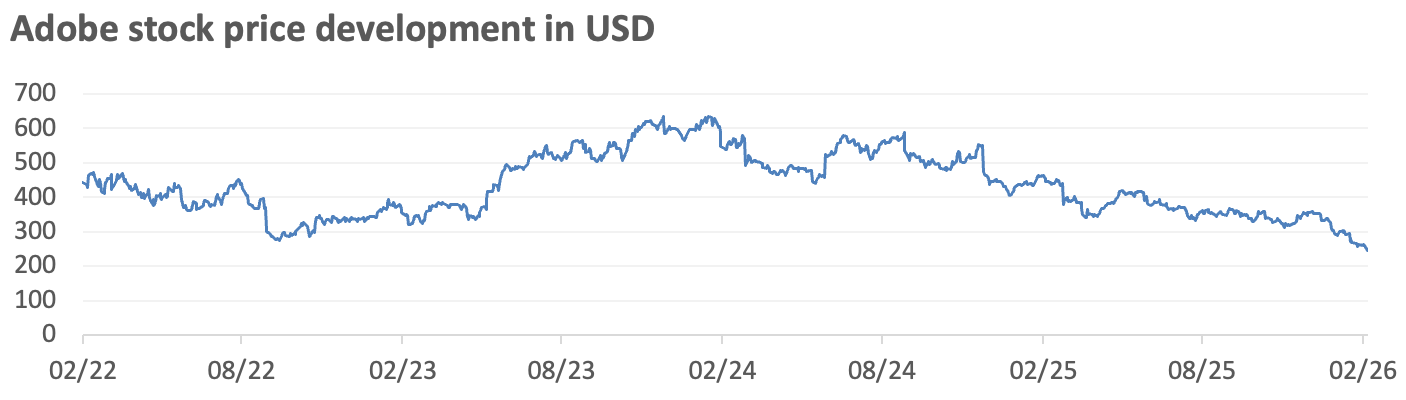
Looking at the stock price you may wonder: Did something fundamentally break?Because price action usually means something is wrong.
What changed beneath the surface
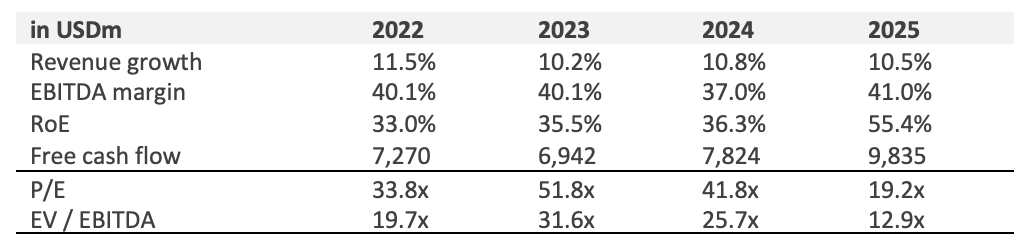
When looking at the numbers the picture is clear:
Revenue is still growing stably at ~10% annually, in line with sector averages.
EBITDA margin is stable in the high 30s to low 40s – above sector norms.
Free cash flow is increasing from $7bn to nearly $10bn.
Net debt is Minimal. Often net cash.
Capital efficiency (RoE) stands at an outstanding 50% and is trending upwards
Capex is minimal.
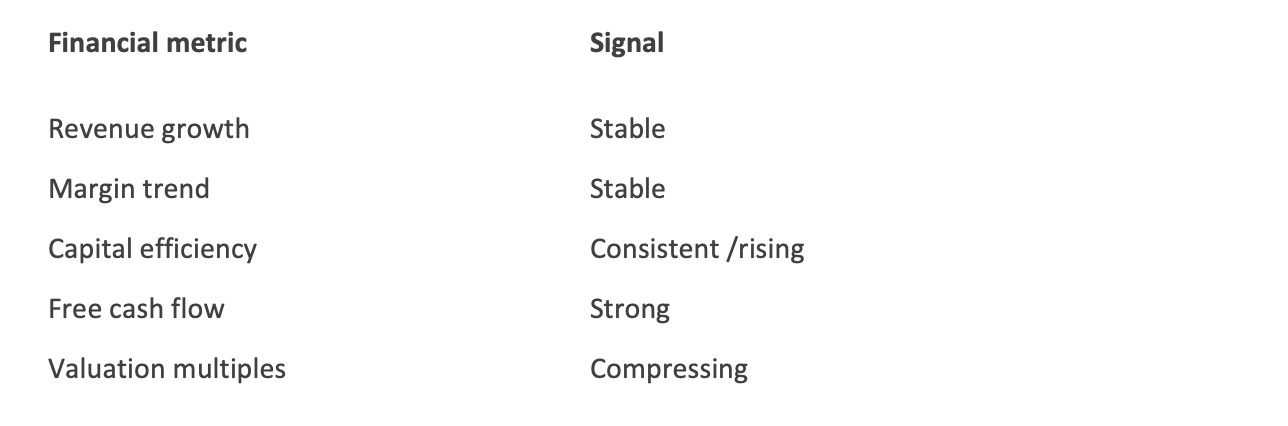
This is not deterioration. This is a high-margin, capital-light, cash-generating software model.
Now look at valuation: EV/EBITDA collapsing to 12.9x, P/E peaking at 52x and now below 20x.
The multiple collapsed while the operating metrics within the company got stronger.
This isn’t structural erosion. This is Multiple Compression Without Financial Deterioration or often referred as a Normalization paradox.
The pattern at work
Why investors often misread this phase
Markets anchor on expectations, not stability. Adobe’s valuation once implied:
Accelerating growth
AI dominance
Perpetual premium positioning
When AI competitors emerged and generative tools commoditized creative workflows, the narrative shifted. Growth didn’t collapse. Expectations did. That difference matters. Today’s valuation (~19x earnings, ~13x EV/EBITDA) implies a mature software company instead of a hypergrowth AI winner.
But the underlying economics remain intact. The stock corrected for over-enthusiasm. Not for operational failure.
The insight
Not every stock decline signals structural weakness. Sometimes it signals expectation normalization. Adobe’s margins are intact. Cash flow is expanding. Balance sheet is strong. The business kept compounding. The multiple didn’t.
And that distinction is where long-term investors can make their edge.
Disclaimer: This analysis reflects one recurring structural pattern observed across companies.
To see how financial health, growth, management quality and valuation are evaluated together, explore the Financial X-Ray framework:
→ Financial X-Ray Overview
https://www.theinsideanalyst.com/methodology
This publication is for educational purposes only and reflects analysis of publicly available financial information. It is not investment advice.
Great insight! Thanks