
Amazon Is More Profitable — But Less Efficient.
If you own Amazon, you probably feel better today than you did two years ago. Margins are improving. Cost discipline is visible. AWS remains dominant. But here is the uncomfortable question.

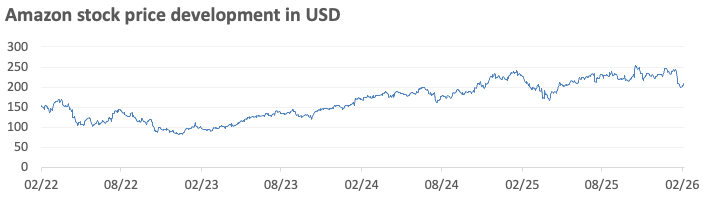
If Amazon is structurally stronger, why isn’t cash scaling with profitability the way you’d expect? That’s the doubt most investors never quite articulate.
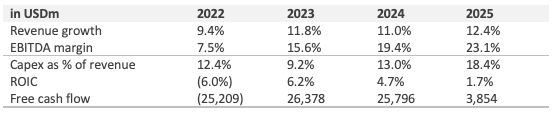
Key signals over the past years:
Revenue: steadily rising
EBITDA margin: expanding meaningfully
Net margin: improving
Capex as % of revenue: rising sharply
ROIC: declining from prior highs
Free cash flow: flat / collapsing relative to profit expansion
What changed beneath the surface
On the surface, Amazon looks leaner. After years of heavy logistics expansion and workforce growth, management tightened costs. Operating margins improved materially. Headline profitability looks much healthier.
But under the surface, something shifted.
Capital intensity increased. Capex as a share of revenue climbed sharply.
Free cash flow failed to scale with margin expansion. Return on invested capital – that measures efficiency per unit of capital tied up in the company – declined.
In other words: Amazon is earning higher margins but it needs more capital to do so.
That’s a very different kind of improvement. Margins expanding while returns compress is not strength. It’s a structural shift in how the business generates profit.
The machine is running smoother but it is consuming more fuel.
The pattern at work
This is not a cash crisis. This is not a debt problem. This is: Margin Expansion Illusion.
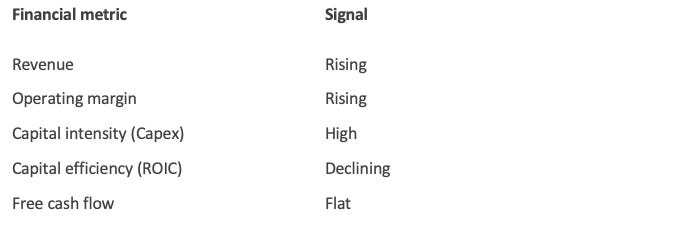
Why investors often misread this phase
Many investors anchor to margins. Higher margins feel like operating leverage.
They feel like maturity. They feel like quality.
But valuation models often extrapolate margin improvement without adjusting for the rising capital required to sustain that improvement.
If capital intensity keeps rising, incremental returns decline, even if operating margins look strong.
The market tends to reward visible margin expansion long before it evaluates capital efficiency. That’s where a risk emerges.
The insight
Amazon may indeed be more disciplined. But the question isn’t: “Are margins higher?” The question is: “Are higher margins translating into higher economic returns?”
If the answer is no, then what looks like structural improvement may simply be a shift toward a more capital-heavy profit model. Margin expansion is not the same as value creation.
This analysis reflects one recurring structural pattern observed across companies.
To see how financial health, growth, management quality and valuation are evaluated together, explore the Financial X-Ray framework:
→ Financial X-Ray Overview
https://www.theinsideanalyst.com/methodology
This publication is for educational purposes only and reflects analysis of publicly available financial information. It is not investment advice.
26 -> 4
Where did the extra 20 billions go? Share buybacks? Write-offs? (of what?)
Any insight into what category of expenditure grew to this size in this time scale?