
Barrick Looks Stronger Than Ever – Beneath the Surface Something Hasn't Actually Changed
Barrick Mining Corporation appears to be improving across the board but that progress is not coming from the business itself. Somethings makes the business look stronger than it is.

Most investors look at what’s improving. We look at what’s actually changing underneath.
How can a structural view on a business enhances your decision making?

Back to Barrick…
These signals rarely move in isolation. When read together, they often reveal structural dynamics beneath the surface of a business. (Full framework)
What changed beneath the surface
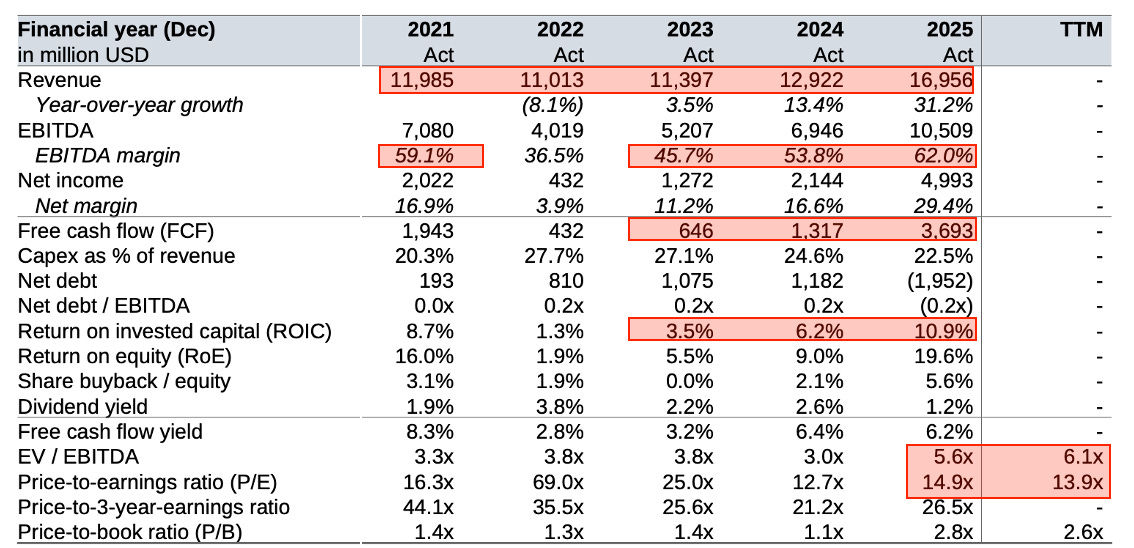
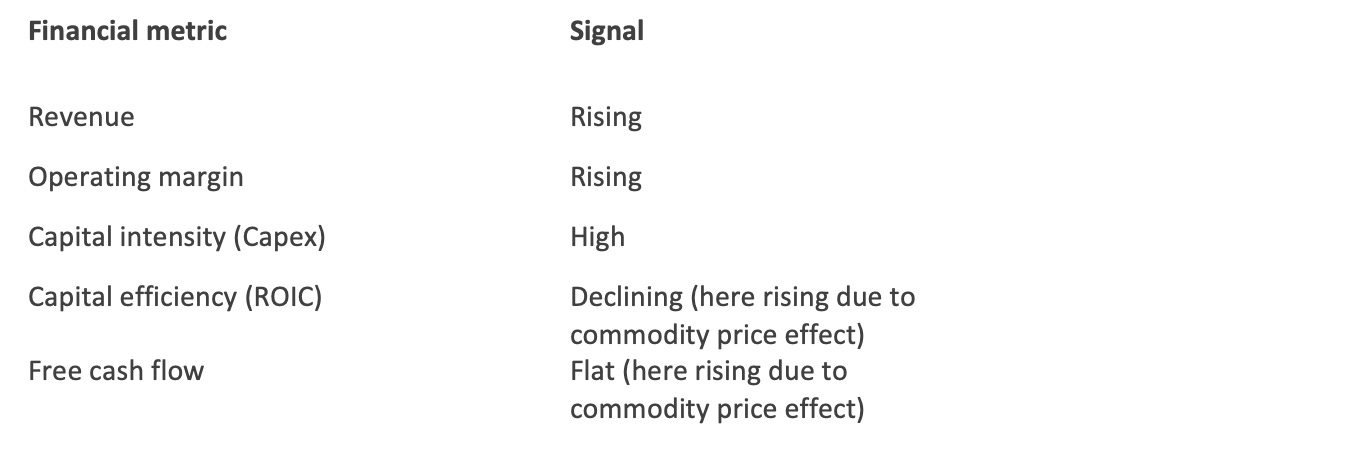
Barrick’s recent performance looks strong. Revenue has grown, margins have expanded, and free cash flow has increased meaningfully.
At the same time, capital intensity remains high, with significant ongoing investment required to sustain production.
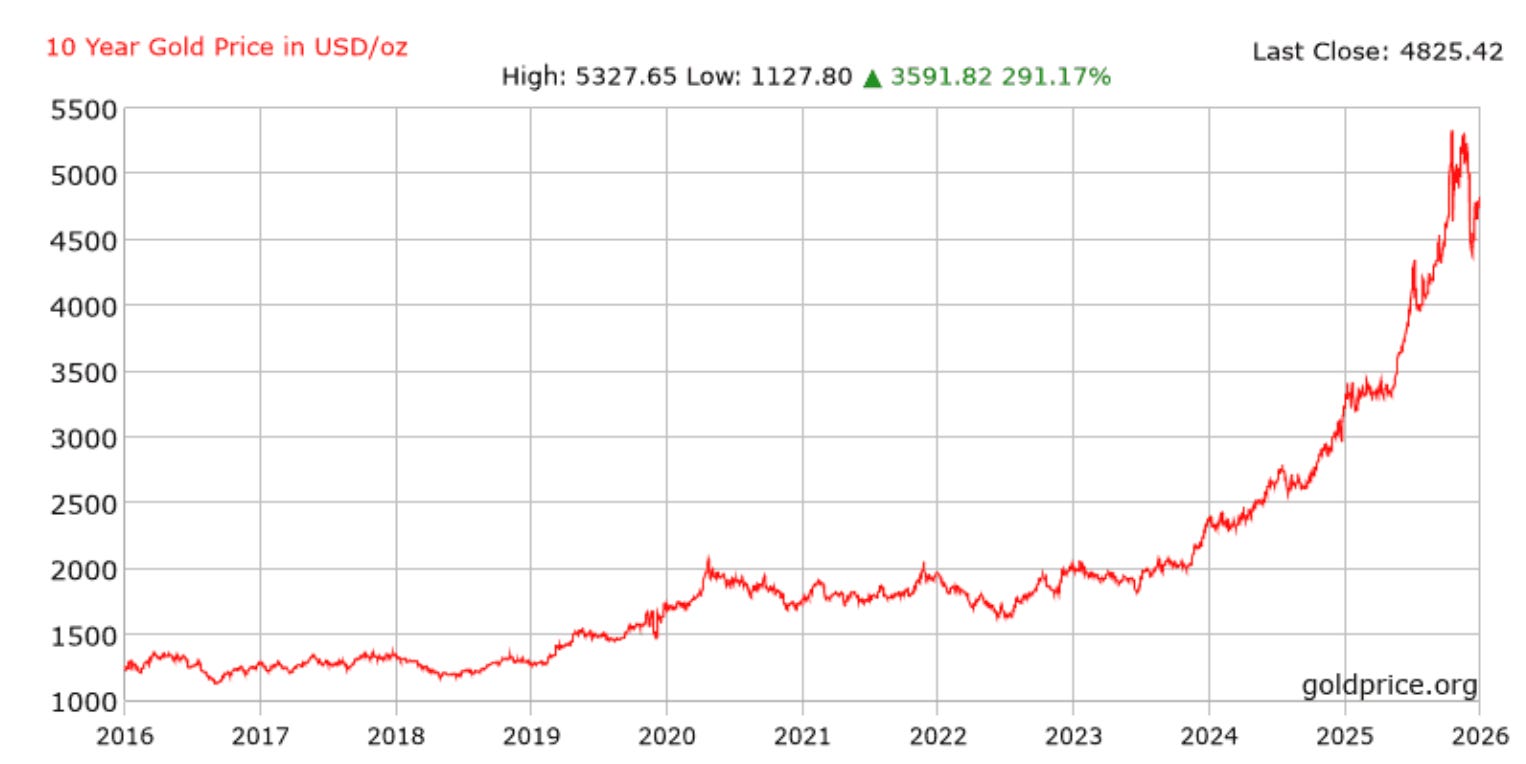
While returns on capital have improved recently, they remain volatile over time and sensitive to commodity price movements. This becomes evident when looking at the 2021 numbers – the first year of elevated gold prices after COVID. The Return on Invested Capital (ROIC) which measures the operating output per unit of capital spikes in 2021 and declines in the following years.
The same behavior is observable across margins and cash flows – even though gold prices remained elevated.
This creates a subtle tension: the business appears more profitable, but its underlying economics have not structurally improved.
A large part of the improvement is driven by higher gold prices rather than operational efficiency.
This situation reflects a recurring financial dynamic: price driven Margin Expansion Illusion (see full pattern here).
The pattern at work
Why investors often misread this phase and what it implies for valuation
Investors often focus on rising margins and strong cash flow as signs of improving quality.
But valuation depends on the sustainability of those returns.
If profitability is driven primarily by commodity prices, it can reverse when conditions change – especially, when stable gold prices lead to declining metrics as observed between 2021-24.
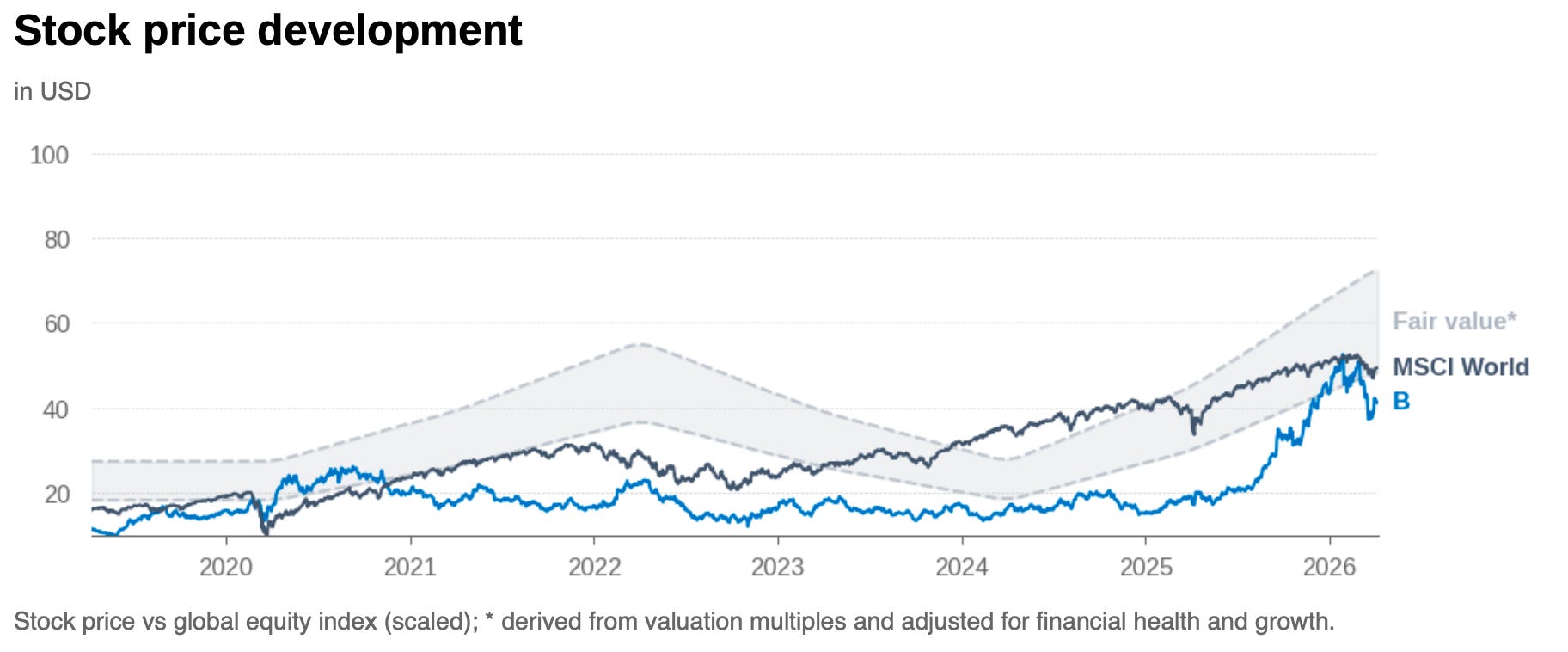
The fair value band reflects this dynamic. As margins expand, the balance sheet gets stronger and valuation increases.
With the stock trading at the lower end of that range we can see the market correctly reflecting the gold price increase. Short-term, investors can expect upsides, but long-term, uncertainty remains about how long gold prices remain elevated. The cyclical risk of the business becomes evident and once gold prices decline, so will the fair value band.
The insight
Barrick is a strong operator with the ability to generate significant cash in favorable conditions.
But when looking at the numbers over an extended period of time a key limitation is observable: much of the recent improvement is driven by commodity prices rather than structural efficiency gains.
When prices are high, the business looks like a high-quality compounder. When they normalize (2021-2024), the underlying capital intensity and volatility become more visible.
For investors, the key question is not how strong Barrick looks today, but how it performs when the cycle turns. And here we can be certain of a reversal back to normal levels.
And this price behaviour is not an exception.
Oil giants – such as Chevron – undergo a similar pattern (see Chevron article)
Disclaimer: This analysis highlights one financial dynamic observed across companies.
This publication is for educational purposes only and reflects analysis of publicly available financial information. It is not investment advice.
"a rising tide lifts all boats"