
When Great Businesses Become Average Investments
Most investors think buying a great company automatically leads to great returns. That logic breaks more often than people realize.

The market usually recognizes exceptional businesses quickly and once that happens, future returns become increasingly dependent on valuation discipline rather than operational performance.
The Financial X-Ray – a comprehensive equity research methodology – recently flagged several companies with exactly this setup:
exceptional financial strength
strong competitive positioning & moat
durable growth engines
but only medium upside
These aren’t weak businesses. They may simply be priced too efficiently.
Three companies stood out:
1. Mastercard: The perfect business everyone already knows
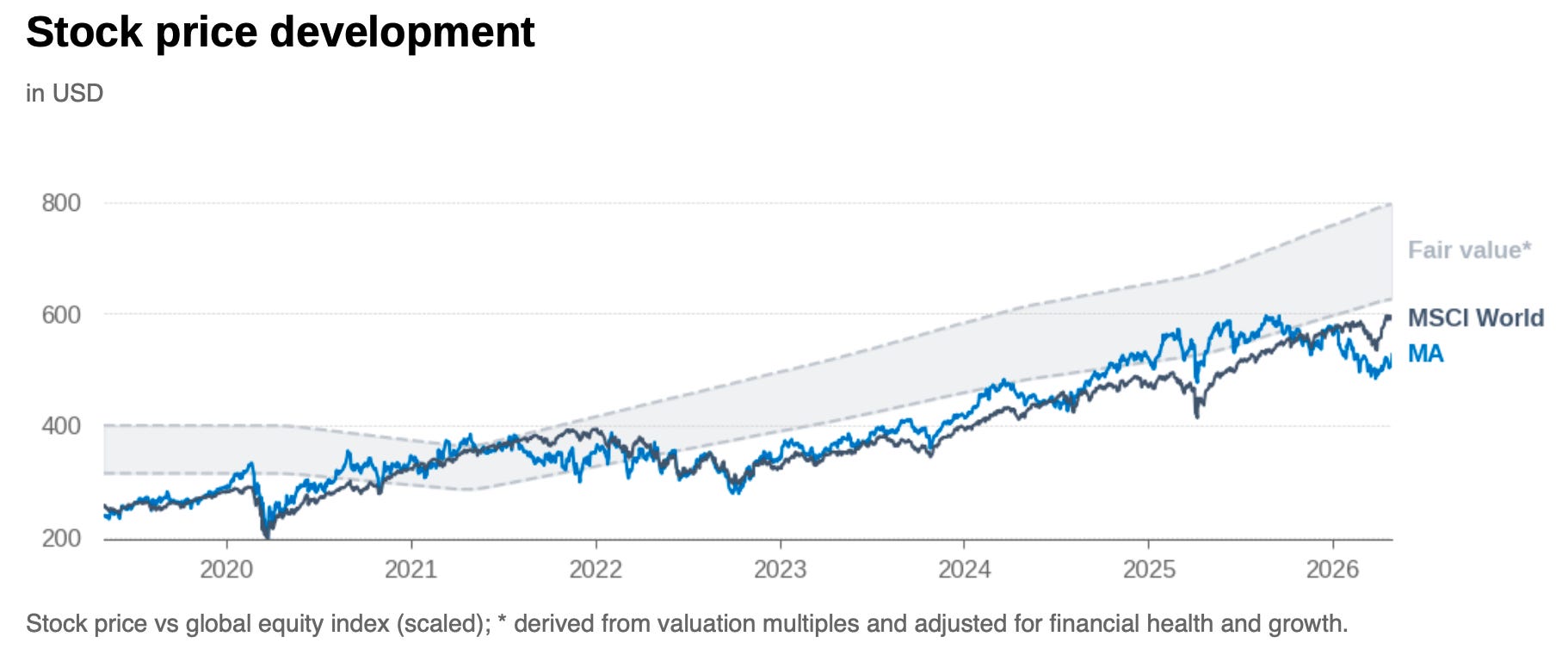
This is arguably one of the highest-quality business models ever built.
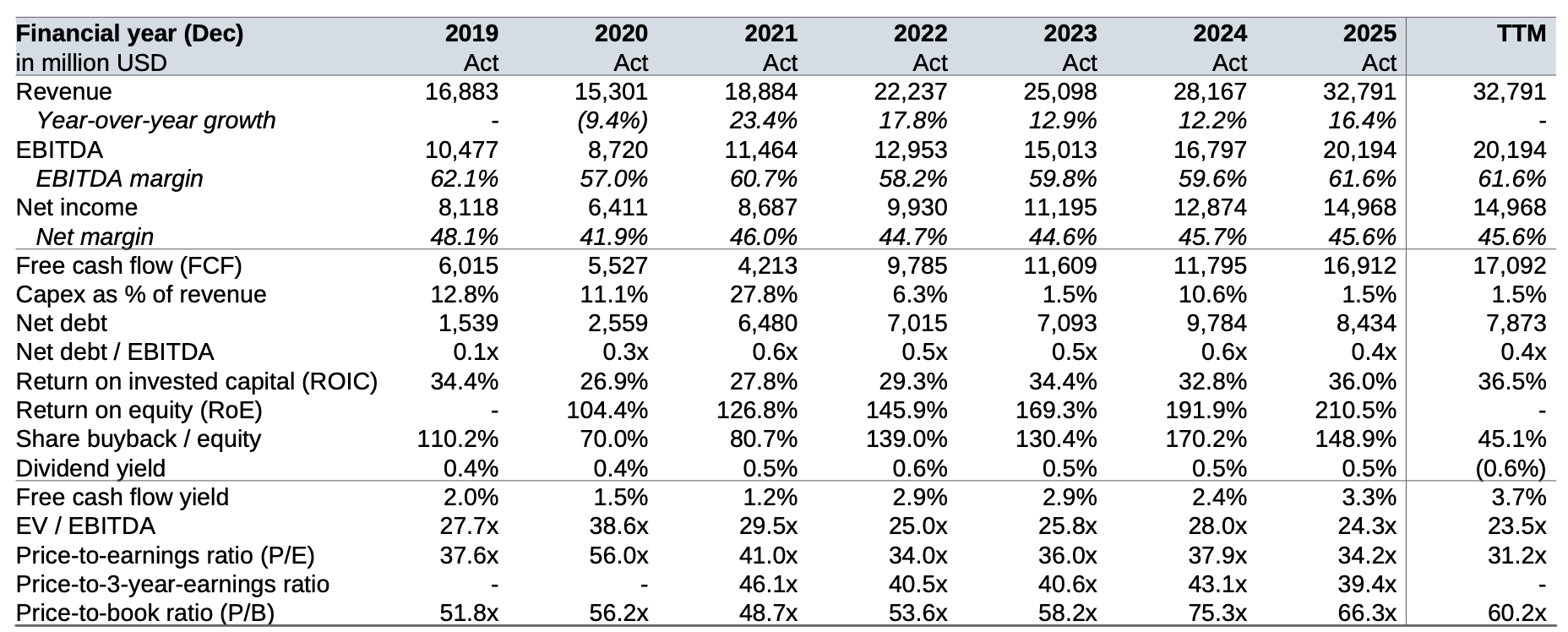
Revenue nearly doubled $16.9B → $32.8B
Net income rose from: $8.1B → $15.0B
Free cash flow climbed to: $17B
EBITDA margins remain above: 60%
ROIC reached 36%:
And: no big periodic swings are observable, no cyclical year, no disappointment.
That’s what happens when you own global payment rails without taking credit risk.
Every digital transaction trend works in Mastercard’s favor:
digital wallet growth
cross-border travel recovery
value-added services expansion
continued cash-to-card migration
And management execution remains exceptional.
The problem
The market already understands all of this. Mastercard still trades at:
~31x earnings
~23x EBITDA
~60x book value
That leaves very little room for multiple expansion.
And regulatory pressure remains a recurring risk as governments continue examining interchange fees and payment market dominance.
The business may continue winning – but that doesn’t automatically mean shareholders will.
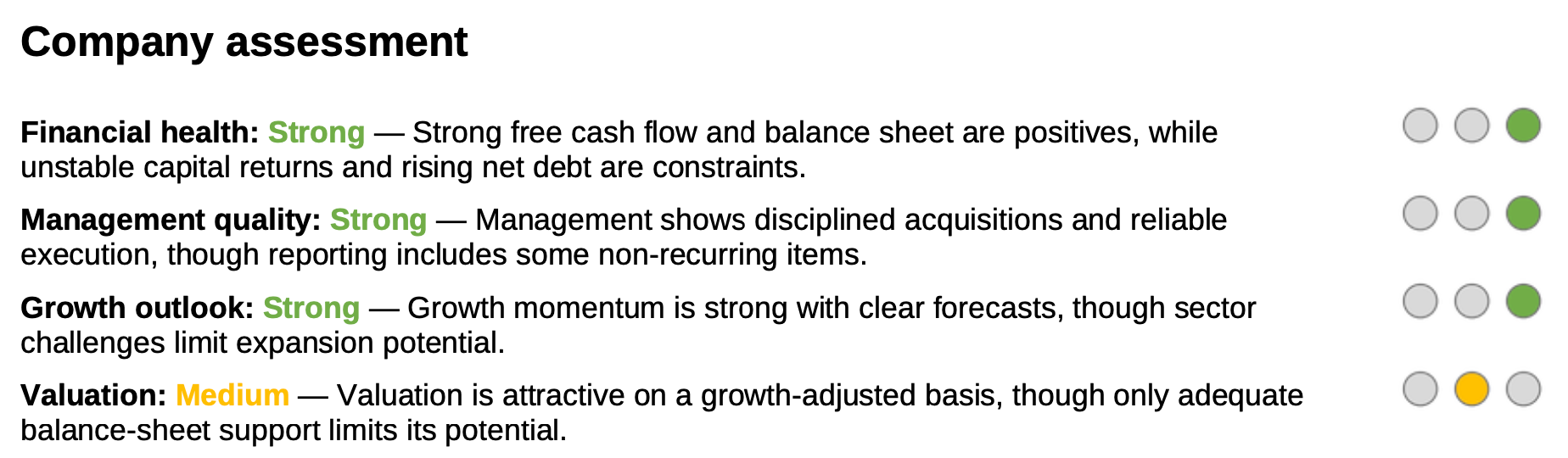
The Financial X-Ray evaluates a deeper layer of parameters and sees strong operations and balance sheet, but rising net debt. The green light reflects the impact of that increase (low). Management performs very well on capital discipline. Valuation and share buybacks are aligned and the company meets its own guidance.
Number 2 and 3 are not as straight forward as both companies quietly strengthened their balance sheet and operation over years.
Paid subscribers get:
full flagship articles covering all featured companies
deeper Financial X-Ray insights
the ability to request companies to be included in the X-Ray database with biweekly coverage
